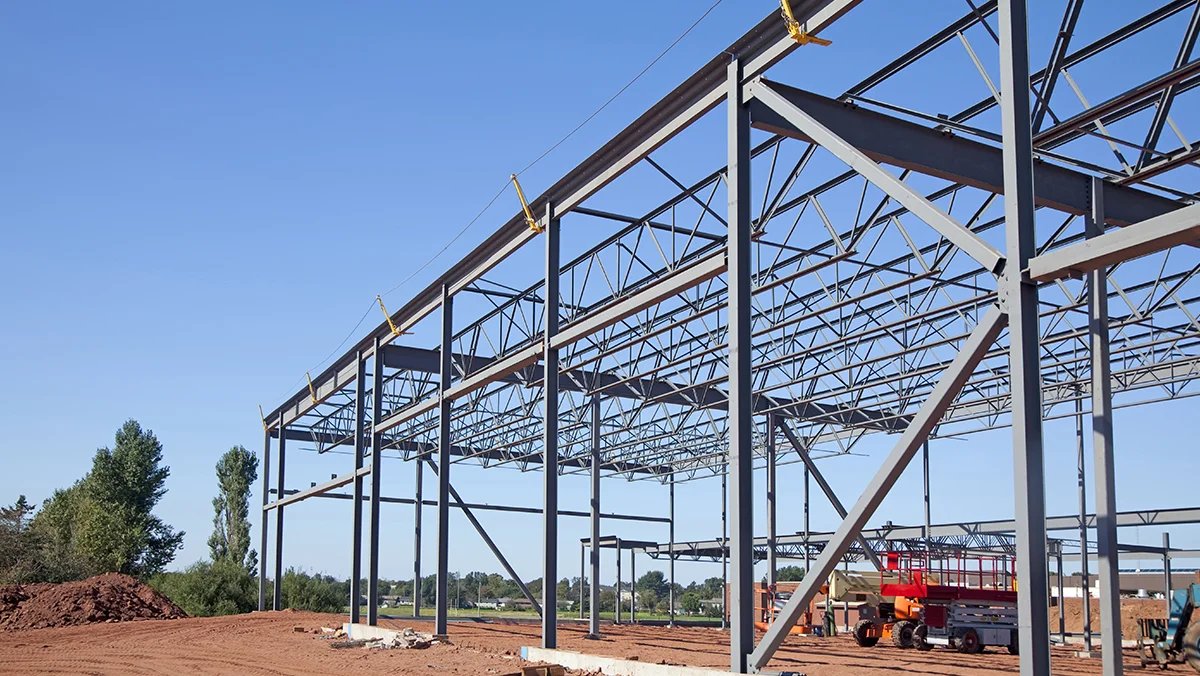
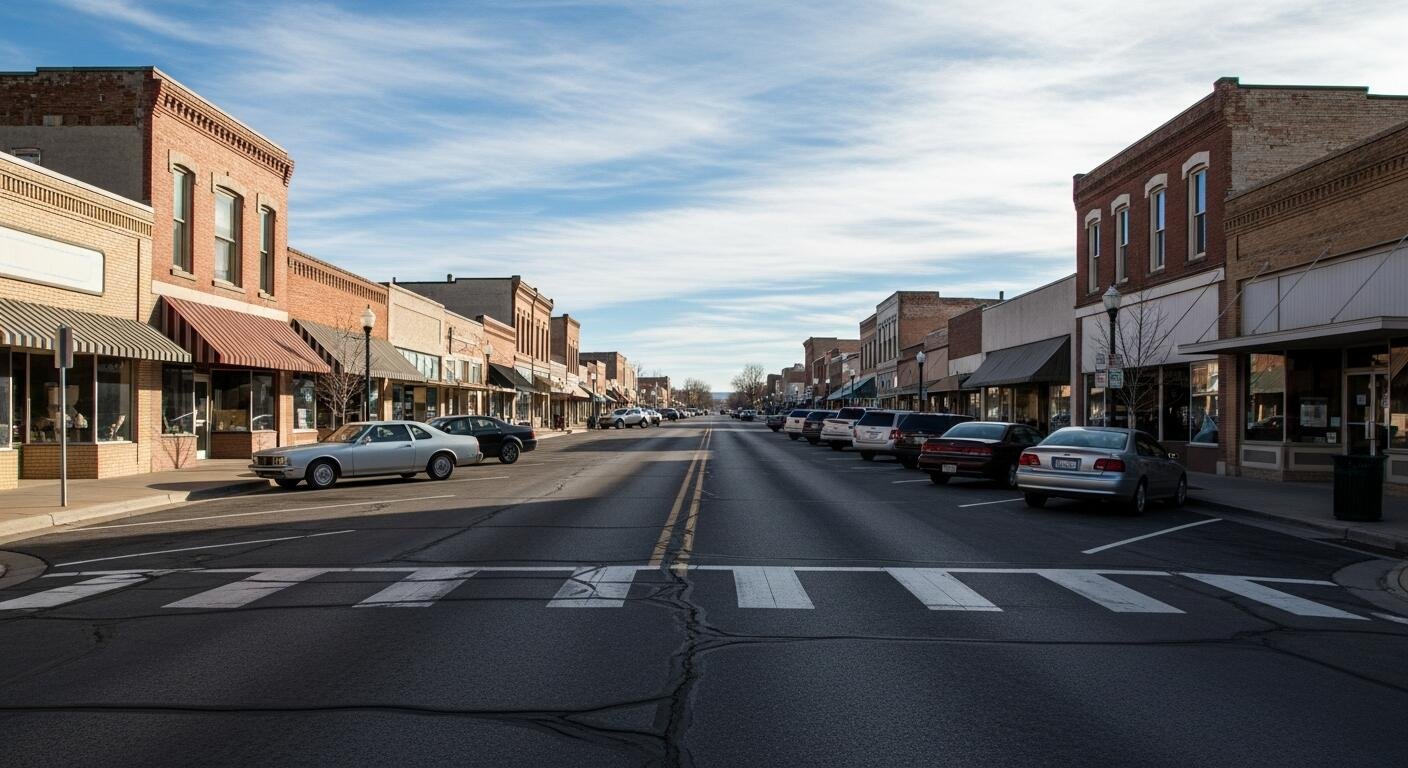
Rail-served yards and I-70 frontage are what industrial owners are really shopping for in Bennett, and the work we do here is building the shells, truck courts and laydown pads that let a user take advantage of both. Colorado State Highways 36 and 79 intersect in town just north of Interstate 70, and the community grew as a railroad hub for the Union Pacific line that still crosses the plains. For a company that ships by truck and receives by rail, or the other way around, that combination is rare outside the core of the metro.
Adams County economic development officials told Denver7 they target healthcare, advanced manufacturing and aviation and aerospace along I-70 near Bennett, next to the Colorado Air and Space Port. That tells us what to expect from tenants: heavier electrical service, larger yards, and buildings that may need to host process equipment, cleanrooms or hangar-style bays.
Bennett is a small town, with 2,862 residents at the 2020 census and an elevation of 5,506 feet, and it straddles Adams and Arapahoe counties. The size matters because plan review is closer to home, but it also means the town has to coordinate with the counties for roads, utilities and emergency access.
Rail, highway and utility questions before the first drawing
A rail spur changes the site plan. The track needs a minimum radius, clear zones and a crossing arrangement with the railroad, and loading platforms or transload areas must meet the railroad's clearance standards. We ask for the railroad's requirements before laying out a building, because the turning radius of a spur can decide whether a building sits parallel to the tracks or perpendicular to them.
Utility capacity is the second question. Parcels near the interstate may be served by the town, a special district or an extension that the owner must build, and each carries a different cost and a different timeline. We run a utility feasibility check as part of preconstruction, and we bring in rail spur and site improvement planning when a track is part of the program. For a conventional building without track, the same feasibility check shapes a warehouse shell around the real limits of the parcel: setbacks, easements, drainage paths and the turning room a 53-foot trailer needs.
Why the I-70 corridor east of the airport is drawing users
Union Pacific replaced wooden trestles near Bennett with steel structures in 1937, a reminder that this crossing has carried freight for a long time and the ground has been used for transport for as long as the railroad has existed. Today the same advantages show up in site selection: freight rail access, an interstate within sight and parcels large enough to hold a building plus a yard.
Users who want to be near the airfield look at the Colorado Air and Space Port, and those who want the aerotropolis road network look at Gaylord Rockies and the aerotropolis. Bennett offers a quieter, lower-cost alternative that is still on the same interstate. A freight user who needs to transfer loads between rail cars and trailers can look at a truck terminal and cross-dock building here, where yard space is more available than at an interchange pad closer in.
Who we build for east of the metro
The user mix reflects the county's stated targets. Advanced manufacturers need clear spans, strong floors, process utilities and a dock for incoming material. Logistics and cold-chain operators want distribution buildings with multiple docks and truck courts.
Aerospace-related users have another set of needs: large hangar-style doors, extensive concrete aprons and sometimes security fencing. Healthcare suppliers want controlled environments and reliable power. We work with each user's engineer to turn a program into a building that is permitted, priced and buildable.
Because the county names aerospace among its targets, owners ask whether a standard industrial shell can be adapted for aviation use. In most cases the answer is yes, with taller doors, a stronger slab at the apron and attention to fire protection, and we price the adaptation alongside the base building so the cost of flexibility is visible.
Codes: Bennett has already moved to the 2024 editions
The Home Builders Association of Metro Denver tracker current as of January 20, 2026 shows Bennett adopted the 2024 IBC, 2024 IRC, 2023 NEC and 2024 IFC, effective January 1, 2026. That is newer than the 2021 edition still used in Aurora and Arapahoe County, so drawings prepared for one jurisdiction cannot simply be moved to another.
Colorado HB22-1362 also requires an energy code at least as stringent as the 2021 IECC for any jurisdiction updating its code on or after July 1, 2023, with the state model low energy and carbon code as the benchmark from July 1, 2026. We design the envelope, lighting and mechanical systems to the edition the town enforces and confirm with plan review before final pricing.
Schedule items that matter on a rail-and-highway site
Rail work depends on the railroad's own schedule for flagging, track work windows and approvals, which can be slower than a typical construction timeline. We include those durations in the baseline and start the railroad coordination at day one, so it does not become the item that holds up the building.
Highway access permits and driveway approvals follow a similar pattern. We submit them early and sequence site work so that the first truck can enter the property as soon as the base course is in place, even if the building is still under construction.
How we run an I-70 project
We start with a short feasibility study: rail, access, utilities, code edition and a block diagram of the building on the site. From there we move into design with an engineer who understands the intended process, then into a guaranteed maximum price when the scope is clear enough to hold.
During construction, we hold a weekly meeting that includes the railroad, the town, utility representatives and the owner's operations lead. The meeting is short and focused on three questions: what is blocking the next trade, what is arriving this week and what approvals are open.
Closeout is planned from the start. We assemble operation manuals, test records, warranties and as-built drawings throughout construction, so that the day the building passes inspection is also the day the owner's maintenance staff can take over without hunting for paperwork.
Start with the track and the highway
Share the parcel and the freight you move. We will return a feasibility check covering rail, access, utilities and code edition.
Questions Owners Ask
Do I need the railroad's approval for a spur or a crossing?
Yes. A spur connection and any crossing require the railroad's engineering review, an agreement and usually a deposit. We begin that conversation at the same time as site design, since it can take longer than local permits.
Which code edition applies in Bennett?
The January 20, 2026 tracker shows Bennett adopted the 2024 IBC, 2024 IRC, 2023 NEC and 2024 IFC effective January 1, 2026. We confirm the edition with the town before drawings are finalized and design to it.
Can I build near the airport without trouble from aircraft noise?
Yes, with attention to the occupied portions of the building. Warehouse space is rarely affected, while offices and break rooms may need better glazing and insulation. We also check height restrictions if the building is near the airfield.
How big a parcel do I need for a distribution building with a rail spur?
Spurs take land, and the track geometry usually requires a long, narrow strip along one side. We test your program on the parcel, including track length, car staging and truck courts, before you commit to the purchase.
Related
Related Services
Related Building Types
Related Industries
Related Service Areas
Ready to talk about your project?
Request a Project Review