Every distribution site along E-470 is a bet on an exit number, so we start there. We build the warehouse shells, dock aprons and truck courts that sit on the toll road's Aurora interchanges, and we price each site by its drive minutes to the ramp, its door count and the turns a loaded trailer must make to get out.
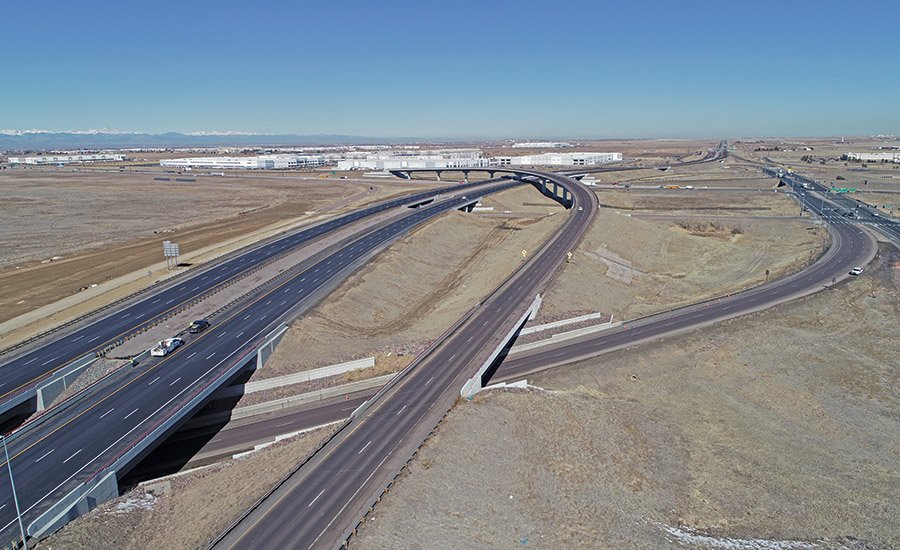
E-470 is a 46.950 mile tollway whose first section from I-25 to Parker Road opened June 1, 1991, with the northern link to I-25 in Adams County opening January 3, 2003. Its Aurora exits are Smoky Hill Road (exit 10), Quincy Avenue (exit 13), 6th Parkway/Stephen D. Hogan Parkway (exit 19) and I-70/Colfax Avenue (exit 20), with Pena Boulevard at exit 28 serving Denver International Airport. That ladder of exits is the framework for how we plan flex and distribution space on the east side.
We speak in doors, stalls and minutes, and the corridor rewards that habit.
Exit by exit along the Aurora stretch
Each exit has its own character. Smoky Hill Road at exit 10 serves the southeast, with retail and office users and a growing base of flex space. Quincy Avenue at exit 13 sits east of the air base, and 6th Parkway/Stephen D. Hogan Parkway at exit 19 serves the northern part of the city. The I-70/Colfax Avenue interchange at exit 20 connects to the interstate and the airport road at exit 28.
We pick a site by asking which of those ramps the trailers will use and what stands between the gate and the ramp. A parcel two signals from an exit may cost tenants more in drive minutes than a parcel on a cheaper lot a mile closer. That comparison is part of the estimate, not an afterthought, and it shapes truck court depth, driveway spacing and queue length.
Door count, stalls and the truck court
The truck court is the most expensive thing on an E-470 site that looks like an empty lot. We size it from the door count: the turning radius for a 53-foot trailer, the depth for a trailer to back in with a clear apron behind it, and the stalls beyond that for waiting trailers. Pavement thickness follows the axle loads, and joints are laid out to match the dock wall.
Our dock aprons and loading zones use heavy concrete with load transfer at the joints, because dock approaches take the hardest abuse on a site. We pour them to a cross slope that sheds water away from the building, and we detail the dock-wall edge so that the slab does not crack where trailers land.
Shells for flex and distribution users
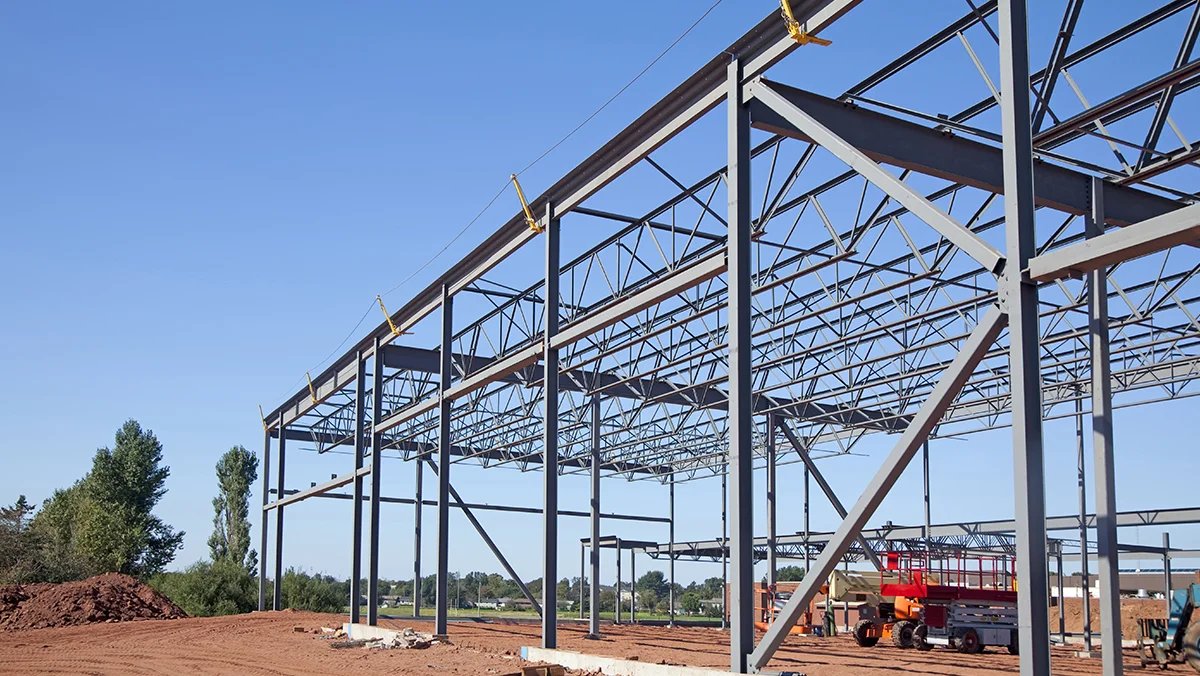
Our shells for the corridor are mostly warehouse shell construction in tilt-wall or steel, with clear heights, column grids and dock counts matched to the tenant. A cross-dock building wants a narrower footprint and doors on both sides, while a fulfillment building wants a deep floor plate and a mezzanine for pick modules.
Many E-470 sites are developed speculatively, so the shell has to work for several tenants. We keep the structural grid regular, allow for more dock positions than the first tenant needs and run utilities so the building can split. A tilt-wall building is a common answer because the panels go up fast and the pour sequence can run alongside site work.
A toll road with eight member governments
The E-470 Public Highway Authority operates the road, with a governing board of eight elected officials, one from each of eight member local governments. The road runs through several jurisdictions, each with its own plan review, so a project near an interchange can involve a city, a county and the authority's access rules. We ask early which entities approve the driveway, the stormwater outfall and any work near the right-of-way.
Aurora sits at the center of the stretch we build in, and its code set decides the building design. Our permitting work with the city of Aurora and with neighbors such as Bennett to the east follows the same pattern: confirm the reviewing entity, confirm the edition, then submit a complete set.
Tolls, trips and the hidden cost of a bad route
The road has 19 ramp toll interchanges and five mainline toll gantries, and no cash is accepted. For a logistics tenant, tolls are a line in the operating budget. A site with a direct interchange can reduce the number of trips that cross extra gantries, so the choice of exit affects operating cost every year after the lease is signed.
For the build, the budget drivers are pavement, utilities and long-lead equipment. Our long-lead procurement management tracks dock levelers, switchgear and sprinkler pumps against the erection sequence. In 2006 the E-470 mainline moved about one-quarter mile west to bypass signalized intersections near its fly-by interchange with I-70, a reminder that corridor geometry can change, so we check current drawings before we finalize an access point. Users in ecommerce fulfillment usually ask about it first.
Tell us your exit and your door count
Send your candidate sites, door count and trailer mix, and we will return a side-by-side comparison by drive minutes, court depth and build cost.
Questions Owners Ask
Which E-470 exit is best for a distribution building in Aurora?
It depends on where your trucks are going and what is between the site and the ramp. Smoky Hill Road is exit 10, Quincy Avenue exit 13, 6th Parkway/Stephen D. Hogan Parkway exit 19 and I-70/Colfax Avenue exit 20. We map drive minutes, signals and turns from each candidate site to its ramp and order sites on that basis.
How deep should a truck court be?
Plan for the trailer length, the apron where it backs in and a clear lane behind it for turning. For a 53-foot trailer this often means a court of well over 130 feet from the dock wall. We confirm the number against the door count and the site constraints.
How many dock positions should a speculative shell have?
More than the first tenant needs, if the site allows. Extra positions cost little during construction and protect future leasing. We lay out the court, the grid and the utilities so the building can split into two or more tenants.
Do tolls matter when choosing a site?
Yes. E-470 has 19 ramp toll interchanges and five mainline toll gantries, and no cash is accepted. A site on a direct interchange can mean fewer gantry crossings for each trip, so the choice of exit affects annual operating cost.
Which agencies review work near an E-470 interchange?
The city or county that holds the parcel reviews the building and site. The E-470 Public Highway Authority, governed by a board of eight elected officials from member governments, controls the road itself. We ask each entity what it needs before submittal.
Related
Related Services
Related Building Types
Related Service Areas
Ready to talk about your project?
Request a Project Review