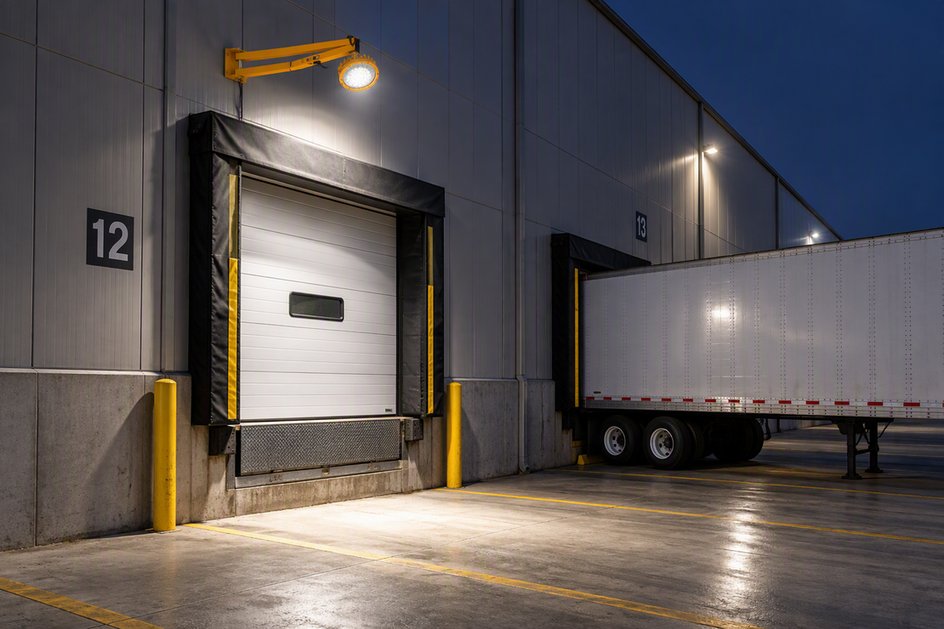
Every dock door is a place where a loaded lift truck meets the edge of a slab, a steel leveler and a trailer bed that has never quite matched the last one. The apron in front of it takes the full weight of landing gear, brake loads and turning tires, over and over, at the same spot. We build aprons and loading zones to take that, with thicker sections, stronger concrete and joints placed where wheels actually go.
An apron is part of the dock system. The leveler pit, the seal, the door, the bumpers, the guard posts and the slab all work together, and a mistake in any one shows up in the others. If the pit is out of square, the leveler binds. If the apron slopes the wrong way, water runs into the pit. If the bumpers are set at the wrong height, a trailer rides up and damages the wall.
We coordinate all of those pieces in the field so that the finished dock operates the first morning and keeps operating for years. Before we hand over, we back a real trailer to a sample of doors and check height, seal contact and leveler reach.
Build the dock as one system
We begin with the dock plan: door count and spacing, leveler capacity, dock height, apron depth, slope and the trailer positions. Then we order the pits and embeds so they arrive before the foundation is poured, and we survey the formed pits against the leveler manufacturer's tolerances. Setting a pit in a hurry after a pour is the surest way to cut concrete later.
Apron concrete is poured in a pattern that supports the doors and respects the joints. We use doweled joints perpendicular to traffic, an edge detail at the building wall that tolerates movement, and a slope of about one percent away from the building so water leaves the dock. The best result for owners is a slab that feels flat to the forklift and drains cleanly to the court, so we check both with a level and a hose test before the apron is accepted.
Docks by building type
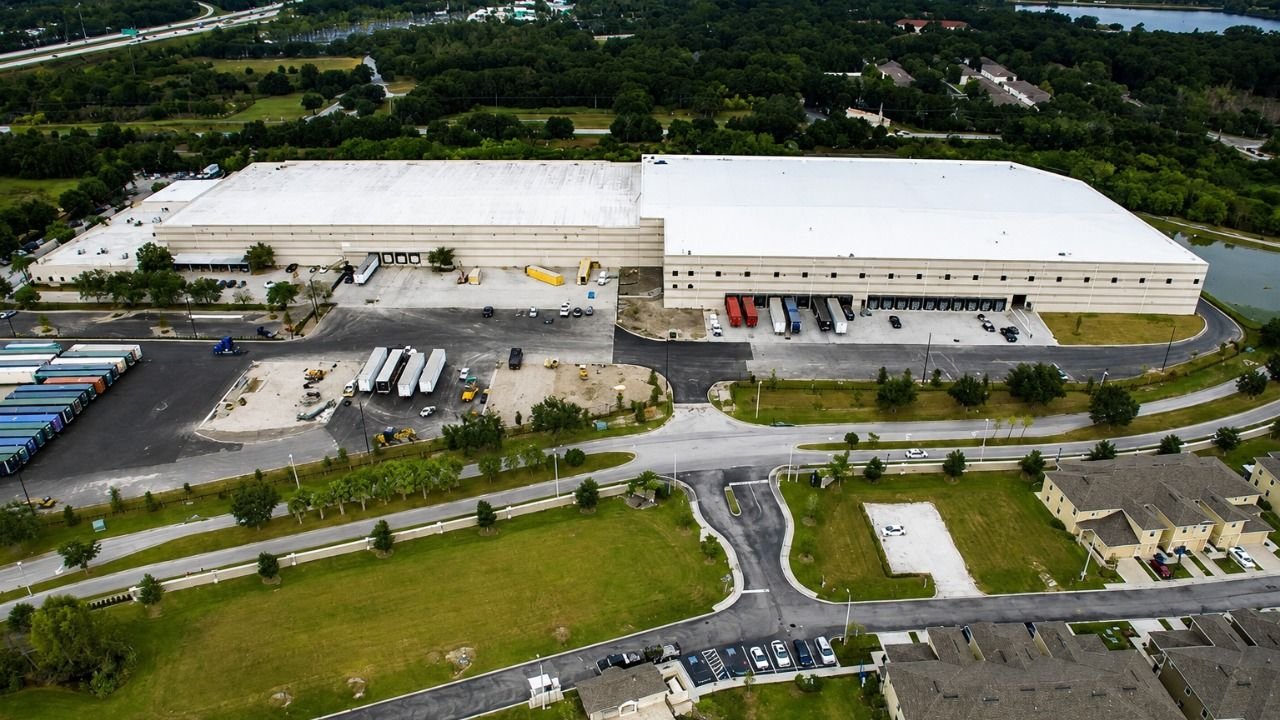
A distribution center may have dozens of doors on one or both sides, which makes consistent pit and apron quality a major factor. A manufacturing plant may have a handful of doors with heavy, irregular loads, perhaps with a truck well or a drive-in ramp. A cold storage facility needs insulated, sealed docks with vestibules and heated aprons to avoid ice.
The loads differ. Palletized goods in standard trailers call for standard leveler capacities. Heavy machinery or steel coils call for higher capacities, reinforced aprons and sometimes a recessed dock. We tailor the apron and pit design to your product and equipment instead of defaulting to a single standard.
Coordinating the concrete and equipment packages
We coordinate qualified trade partners for formwork, rebar, concrete placement and finishing for aprons and pits, along with the installation of guard posts, bumpers and wheel guides. The pit-forming and apron-placement trades work to the same surveyed controls and recorded tolerances.
We also install the dock equipment through specialty subcontractors when the manufacturer requires certified installers. Electrical and controls are coordinated at the same time: lights, signals, locks and sensors. Access for forklifts during construction is protected with steel plates and temporary ramps. Where the site demands it, we tie the apron to the court using details from our truck courts and trailer yards work.
Preventing the accidents docks cause
Docks are one of the most hazardous places in a building. Trailer creep, unexpected departure, forklift falls and pedestrian strikes are the common events. We install vehicle restraints, wheel chocks, signal lights, guarding and protective barriers according to the plan and manufacturer instructions. Bollards go where they protect doors, pits and equipment, and they are set in concrete with footings sized for impact.
Lighting and visibility also matter. We position dock lights to illuminate the trailer interior, coordinate with the electrical plan for outlets and control, and check that stripes, signage and pedestrian crossings are visible. Access for the fire department to the building remains clear around the dock zone. The trade crews follow lockout rules when working on live leveler or door power during retrofit work, and we brief your dock supervisors on which doors are closed each shift so drivers are never sent to a pit that is open.
Retrofits and upgrades
Many of our dock jobs are on existing buildings. Adding doors, raising or lowering a dock, installing a refrigerated dock or replacing a failing apron all involve cutting into a working facility. Cold chain operators should see our refrigerated dock retrofits, which handle insulated panels, seals and vestibules.
Access also depends on the road network. The $87 million E-470 interchange at Aurora Highlands Parkway opened fully on June 28, 2024, and it changes how trucks reach nearby parcels. Docks on those sites can be oriented to take advantage of the new route; see our Aurora Highlands page. In cold storage and refrigerated operations, dock performance directly affects energy cost and product quality.
Make every door work from day one
Tell us your door count, building type and trailer mix, and we will propose an apron and pit design with a schedule that fits your building. Existing-building upgrades are handled in the same way, with a plan for operating while we work.
Questions Owners Ask
How thick should a dock apron be?
The design depends on trailer weights, number of repetitions and the soil beneath. Aprons are thicker than general paving, with doweled joints and sometimes extra reinforcement. We build to the design your engineer stamps and discuss options.
Why do aprons crack near the leveler?
Common causes are poor subgrade, a joint not placed where the slab wants to crack, and loads from landing gear. Good compaction, dowels and a joint layout aligned with the pit reduce the risk. If cracking happens, we repair with routing and sealing or panel replacement.
How long does it take to add dock doors to an existing building?
The work includes cutting the opening, framing, setting the pit and leveler, pouring the apron and installing the door. A single door can take a couple of weeks of work on site, with longer lead for equipment. We stage multiple doors so operations can continue.
Can you fix a dock that floods?
Usually, yes. The causes are slope, drain location and seal. We regrade the apron, add trench drains if needed, and correct pit drainage. Preventing water in a cold climate also prevents ice.
Do you handle dock equipment as well as concrete?
We coordinate and install it with certified installers from the manufacturer. Checking concrete and equipment requirements at the trade handoff helps avoid a pit that does not fit the leveler.
Related
Related Services
Related Building Types
Ready to talk about your project?
Request a Project Review