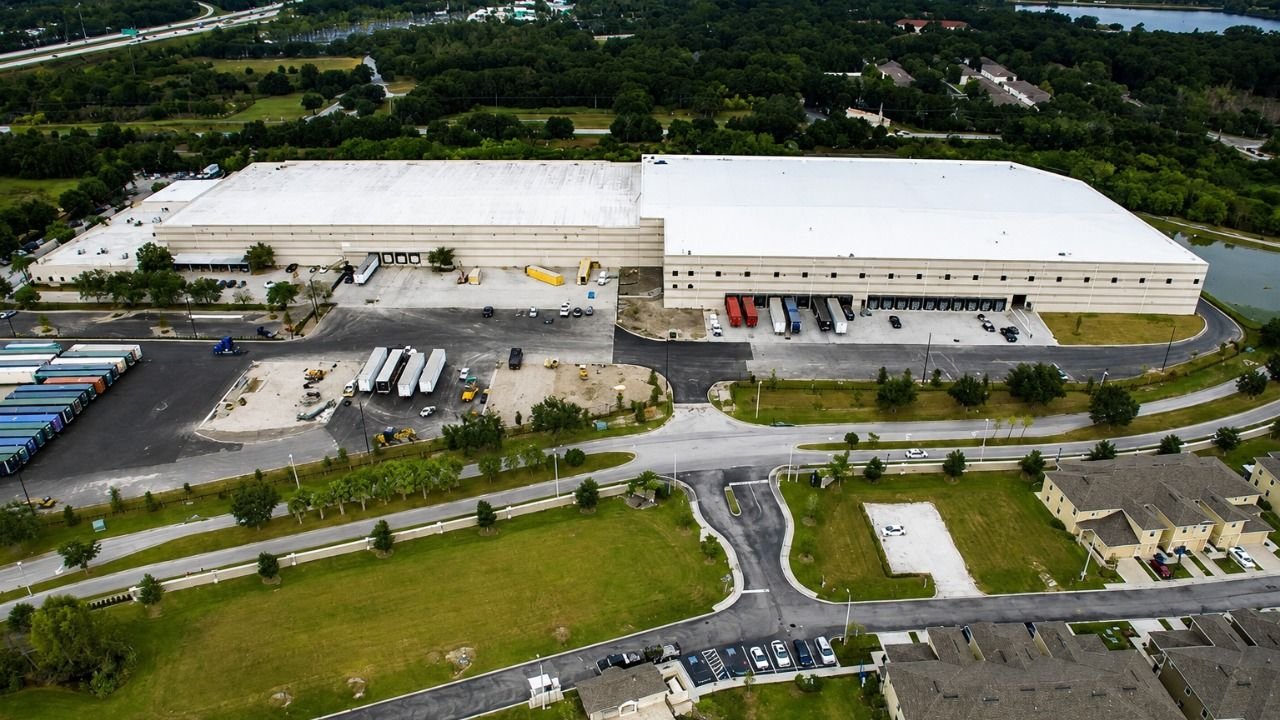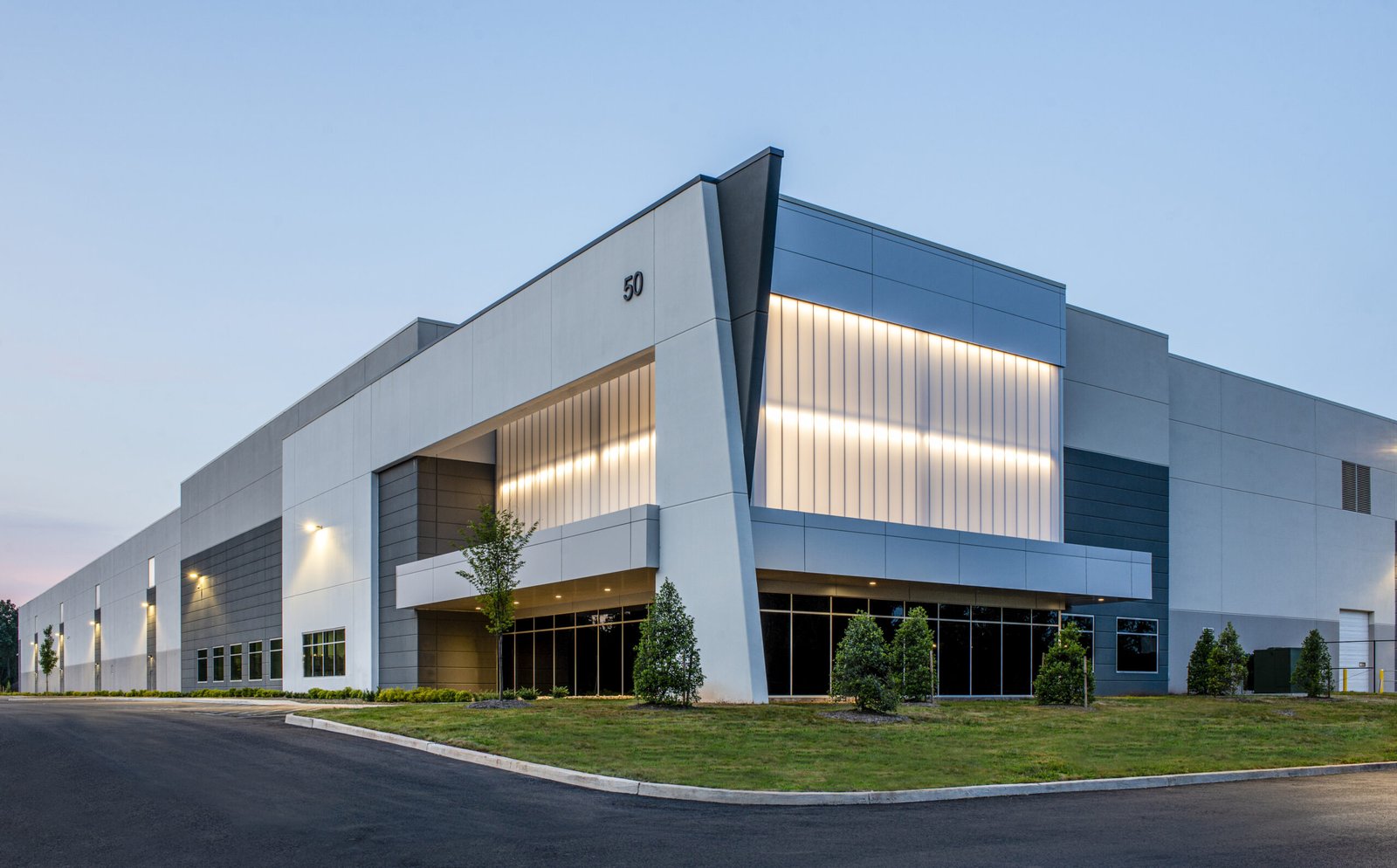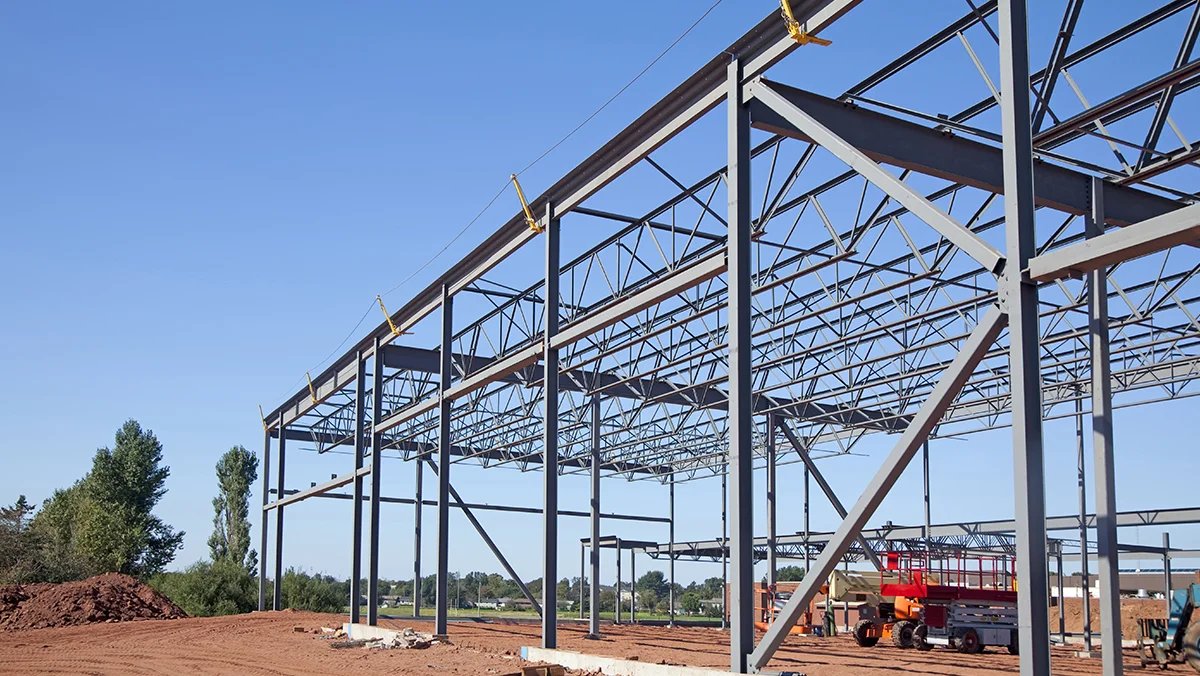
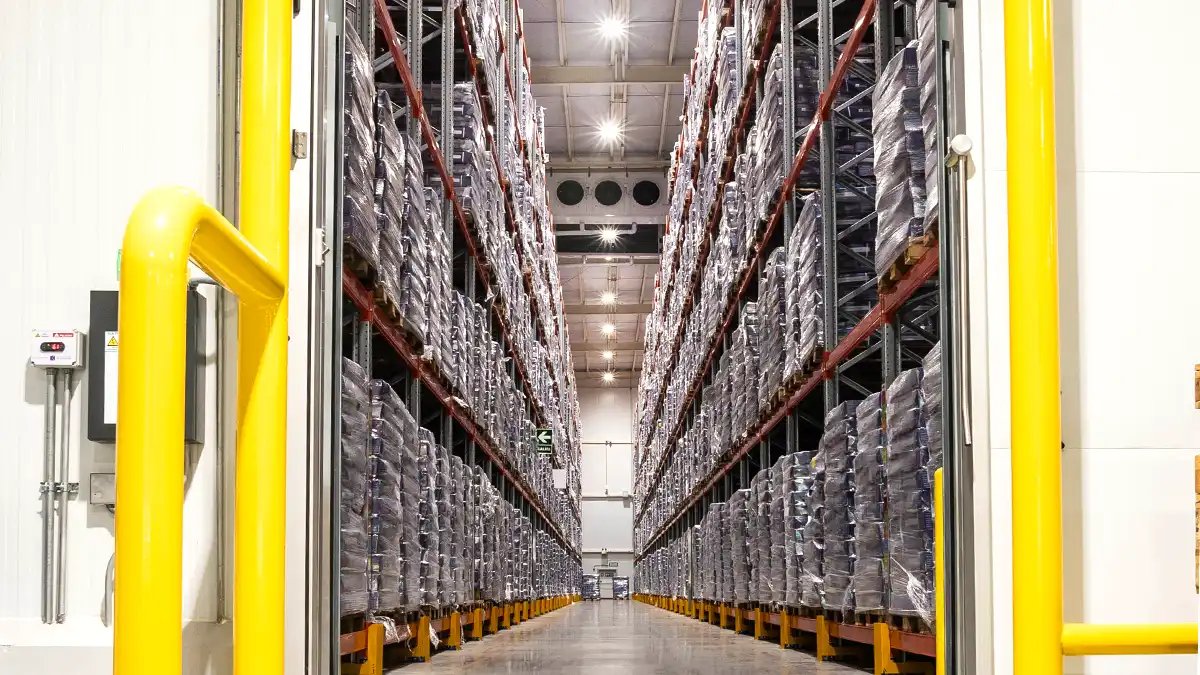
Trailer stalls decide how a distribution site actually works, more than the building does. A fulfillment center announced with about 1,000 jobs on Smith Road lives or dies by how quickly a driver can turn in, find a door, drop a trailer and leave, and every one of those moves happens on a paved surface that has to carry loaded steel wheels all day. We build the truck court, the trailer yard and the drive aisles that make that flow possible.
The design starts with a turning diagram. A 53-foot trailer needs a certain depth in front of the dock to back in without blocking the aisle, and a certain width at corners to swing without clipping a curb. We test those movements on the real site plan before any concrete is ordered. Depth, stall angle, drive width and the location of the gate decide the number of trailers the court can handle, and with it the throughput of the building. We also mark the court so drivers read it at a glance: lane arrows, stall numbers that match door numbers, and a clear path from gate to scale to dock.
After the geometry, we build the structure: subgrade, base, reinforcement, joints and finish, specified for the loads the court will see.
Why trailer count is a site decision here
Highway access along this side of the metro is a competitive advantage, and sites are valued for how directly they put trucks on it. E-470 has interchanges near Brighton and Commerce City with access to I-76, and one in the Brighton area near Henderson with U.S. 85. In Parker, E-470 and State Highway 83 are the major highways. In Aurora, the toll road's exits run from Smoky Hill Road to I-70.
That access is what lets an operator run more trailers per day through a given building, which in turn raises the demand on the court. A site that feels adequate on paper can become a bottleneck when peak-season volume arrives. We discuss peak, not average, with owners, and we build the court for the busiest day of the year.
Buildings that live and die by the court
The courts we build serve logistics and fulfillment centers, distribution centers, truck terminals and cross-docks, and manufacturing plants with heavy outbound freight. Cross-docks are the most demanding: trailers move in and out of every door many times a day, so the concrete near the doors sees the heaviest and most repeated loads.
Cold buildings add condensation and ice risk at dock aprons, so slopes and drainage are tighter. Truck yards for fleet operators add fueling, wash areas and maintenance bays that call for chemical-resistant surfaces. For each type we decide where to put reinforced concrete and where asphalt is sufficient, and we show you the cost difference over the life of the pavement. Because trailers and tractors tend to sit in the same stalls for hours, we also look at the point loads under landing gear and specify the section accordingly.
What a finished court includes
The scope covers subgrade preparation and proofing, aggregate base, concrete paving with dowels at joints, reinforcing where the design calls for it, curb and gutter, drive approaches, striping and wheel stops, light pole bases, gates and, where needed, a landing pad for trailer dollies. We coordinate with dock aprons and loading zones so that the area directly in front of the doors, which sees the most abuse, has its own thicker section and joint layout.
Joint layout is not decoration. We place contraction joints to match panel geometry and dock spacing, saw them at the right time after the pour and seal them against moisture and salt. A well-planned joint pattern lets the court crack where it is supposed to, and it keeps forklifts from hitting wide, rough seams at speed.
Coordinating concrete placement
We coordinate qualified trade partners for the placing, finishing and curing of court concrete, with laser screeds for big pours and hand finishing at edges and details. We pour in lanes planned around truck access, so the yard stays usable during construction when possible. Mix designs are chosen for strength and durability, including air entrainment for freeze-thaw exposure.
Curing is where many courts are lost. Dry wind and sun on the plains can pull moisture out of fresh concrete in an hour. We use curing compound, wet cover and windbreaks to protect each pour, and we log temperature and conditions. Coordinated trade partners also build heavy haul access roads into and around the site, so the surface a truck sees on the way in matches the one it parks on.
Thickness, steel and subgrade
Three items drive court cost. The first is slab thickness, which depends on trailer loads and the soil's bearing capacity. The second is reinforcement and dowels. The third is subgrade preparation: poor soils may need stabilization or replacement, and expansive clay near the surface needs careful moisture control. We price each separately and show how a change in thickness affects the lifetime cost.
Operators in ecommerce fulfillment often ask whether a thinner pavement is acceptable in drive aisles that see lighter loads. Sometimes it is, but we caution against it near gates and turning areas, where wheel loads are concentrated. A court that needs repair after three years costs more than the thicker section would have, and it takes the yard out of service.
Build the yard for the busiest day
Send us your site plan, dock count and trailer count, and we will test the turning movements, size the pavement and give you a cost and schedule. Sites near the toll road are covered in our Brighton notes.
Questions Owners Ask
Concrete or asphalt for a truck court?
Concrete is usually the better choice at dock aprons, turning areas and trailer parking, where loads are heavy, stationary and repeated. Asphalt can work for lighter-duty drive aisles and employee parking. We compare the lifetime costs and recommend a mix.
How many trailer stalls do we need?
It depends on your operation: trailers dropped, live loaded, staged for the next shift. A common planning ratio relates stalls to doors, but we use your throughput numbers. We test layouts on the actual site, since setbacks and detention can change what fits.
How thick should the pavement be?
The thickness comes from the pavement design, which uses trailer axle loads, number of repetitions and the strength of the soil. We build to the design your engineer stamps and can value-engineer alternatives with them.
Can the court be built before the building?
Sometimes. Building the court early gives you a working yard during construction, but heavy construction traffic can damage new concrete. We usually pour the dock aprons after the building shell and the remaining yard once the heavy hauling is done.
How do you prevent cracking?
Good subgrade, proper joint layout, correct curing and sealing. Some random cracking is normal in concrete, and a joint plan puts most of it where it can be controlled. We review the joint plan with you before the pour.
Related
Related Services
Related Building Types
Ready to talk about your project?
Request a Project Review