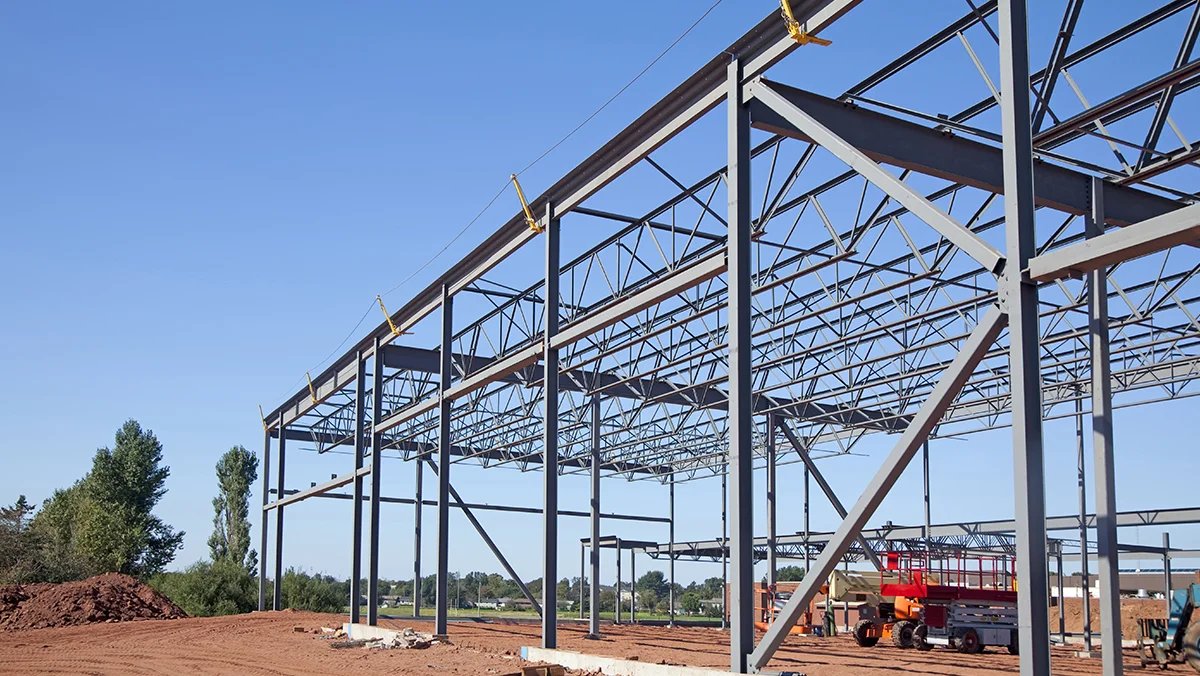
Raw ground is the starting point for most Aurora Highlands work, and we take it from open land to a pad-ready, utility-served parcel and then put the building on it, under one contract. Mass grading, trunk utilities, stormwater and vertical construction belong together on a site this size, because the sequence is where the schedule is won or lost.
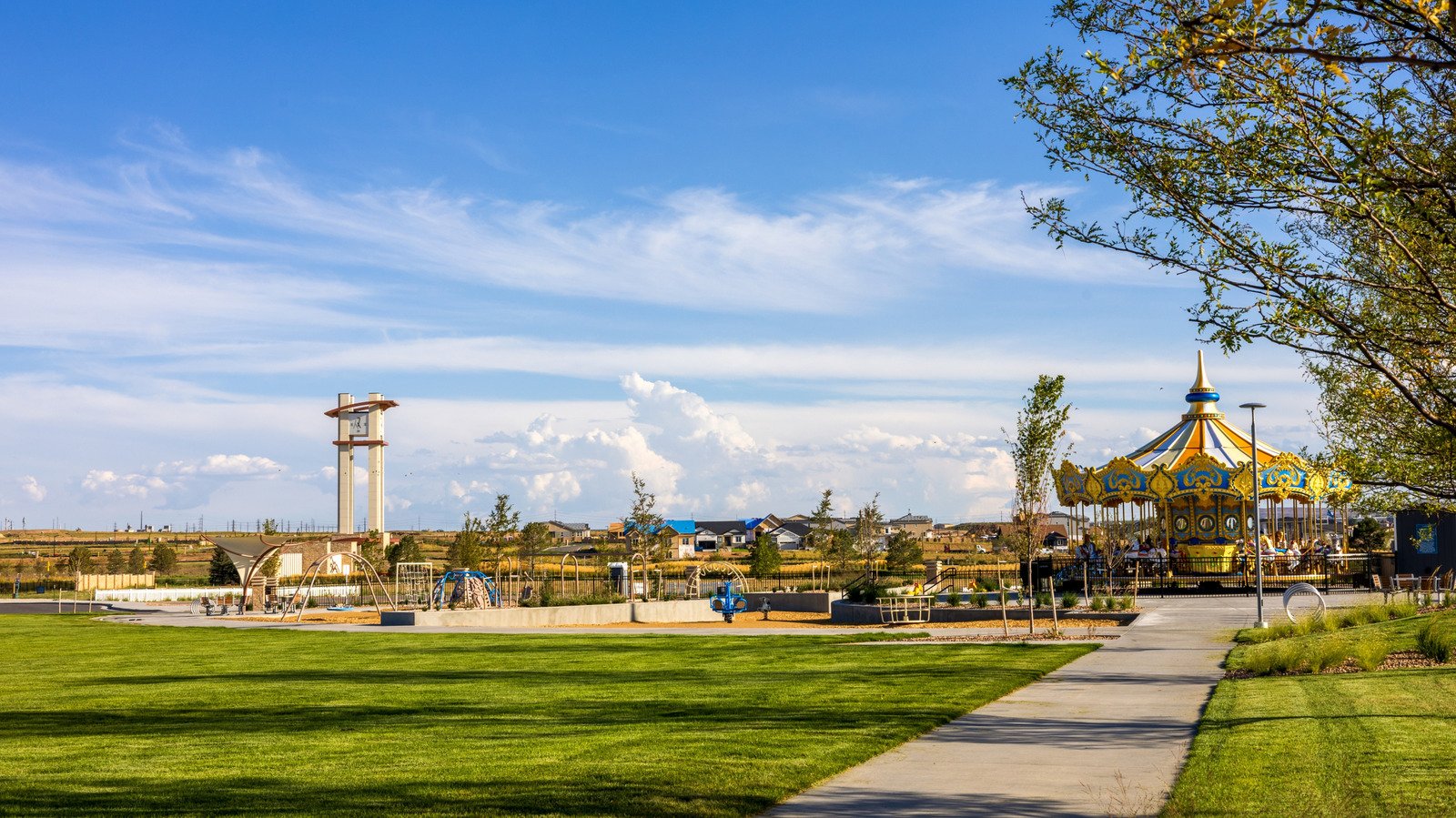
The development spans about 4,000 acres, with a master plan of 13,000 units, five schools and a 50-acre hospital site, and it is expected to reach 60,000 residents over the next few years. The E-470 interchange at Aurora Highlands Parkway cost $87 million and fully opened on Friday, June 28, 2024, with the north side open in December 2023 after construction began in January 2023. A full interchange gives trucks direct ramp access, and that is what opens the industrial parcels around it.
We measure this kind of work in acres graded per week and in weeks from notice to proceed to a pad ready for steel.
An interchange, a master plan and 21,000 acres of new roads
The Aerotropolis Regional Transportation Authority is building roads for an area of about 21,000 acres south of Denver International Airport, bounded by E-470, Powhaton Road, and 26th and 48th Avenues. Studies cite 40 million square feet of industrial and commercial space and 170,000 jobs at build-out. Those are projections, and we read them as a signal of where infrastructure is headed instead of a promise of when a tenant arrives.
For an owner, the practical meaning is access. Road and interchange work is what turns farmland into a site a distribution tenant will lease, and parcels near finished roads move first. We follow the road schedule parcel by parcel and plan site work to meet it. The Gaylord Rockies and aerotropolis area and the wider E-470 corridor are part of the same growth path, and we plan with both in mind.
From raw ground to pad-ready
A greenfield parcel needs four things before steel arrives: cleared ground, balanced earthwork, a drainage plan and utilities to the property line. Our site clearing and mass grading work starts with a cut and fill model that balances earthwork on site so we are not hauling dirt in or out. We stage topsoil for reuse and set erosion control before the first scraper moves.
Drainage follows grade. Our stormwater detention and drainage package sizes ponds, outlets and swales to the parcel and ties them to the master drainage system, which on a large development is shared by many owners. Dry and wet utilities then come in on the same alignment, so streets are opened once.
Which jurisdiction reviews your parcel
Commercial building codes in Colorado are adopted city by city and county by county. A Home Builders Association of Metro Denver tracker dated January 20, 2026 shows Adams County on the 2018 I-codes and Aurora and Arapahoe County on 2021. Aurora Highlands lies southeast of Denver in an area where county and city boundaries meet, so the reviewing authority, and with it the code edition, depends on exactly where your parcel sits.
We confirm jurisdiction before we draw. We ask which entity reviews the site plan, which reviews the building, and whether the metropolitan district or community authority has its own standards for roads, drainage and landscaping. That one conversation can change structural loads, energy compliance and the order of approvals, so it happens in the first week.
Building alongside road and utility construction
On a master-planned site the road builder, the utility contractor and the vertical contractor all work in the same weeks. We coordinate with them directly. Temporary access, haul routes and laydown areas are agreed in writing, and we avoid closing a street the road contractor needs for paving. If you plan several buildings, our programmatic multi-site rollouts process repeats one design and one sequence across them.
Weather and wind matter on open ground. Dust control, wind limits on tilt panel lifts and winter pour protection all affect the calendar, so we carry float for them. The first trailer through the gate is the date we plan toward, and we hold it with weekly look-aheads shared with your team.
Wind, dust and heavy equipment on open ground
Open ground brings its own hazards. Scrapers, haul trucks and compactors share the site, and visibility drops fast in dust. We separate haul routes from work areas, assign spotters at every crossing and water the haul roads on a set schedule. Wind speed is checked before tilt panel lifts and crane picks, and we stop work when readings pass the limits in the rigging plan.
Erosion and dust control are part of the same plan. Silt fence, inlet protection, stabilized construction entrances and seeded slopes go in early, and we inspect them after each storm. On a site where neighbors may be moving in while we build, keeping dust and mud off the roads is both a safety item and a good-neighbor item.
Where greenfield budgets move
Three items move a greenfield number most: earthwork balance, detention volume and offsite improvements. A parcel that must import fill costs far more than one that balances. Detention can take a large share of the usable acreage, and offsite roads or utility extensions required by the approving entity sometimes cost more than the building's foundation.
We price those items early so the land decision can account for them. A logistics fulfillment center or distribution building on a clean parcel can go from award to dock in a predictable window, and users in logistics and distribution tend to ask us about that window first.
Start with the parcel, not the building
Send us your parcel and the building you want, and we will return an earthwork balance, a utility plan and a schedule from notice to proceed to first load-out.
Questions Owners Ask
Can you take a raw parcel in Aurora Highlands all the way to a finished building?
Yes. We handle clearing, mass grading, stormwater, utilities and the vertical build under one contract. That keeps one schedule and one point of accountability, and it avoids gaps between the site contractor and the building contractor.
How does the new E-470 interchange affect industrial sites near Aurora Highlands Parkway?
The $87 million interchange fully opened June 28, 2024 and gives trucks a direct ramp connection. Parcels with a short, clean route to the ramp are easier to lease. We map the truck route, including turns and signals, for each candidate site.
Which building code applies to a parcel in this area?
It depends on the reviewing jurisdiction. A January 2026 tracker shows Adams County on the 2018 I-codes and Aurora on 2021. We confirm which entity reviews your parcel and design to its adopted edition.
How do we plan for detention on a large site?
We size detention early because it takes acreage. The ponds are tied to the master drainage system, with outlets sized to the approved release rate. We place them where they also serve as grading low points, so earthwork stays balanced.
Are the 170,000-job and 40-million-square-foot figures reliable for planning?
Treat them as projections. They come from studies describing build-out of the roughly 21,000-acre aerotropolis area, and the timing is uncertain. We use them to understand direction, then plan around the actual roads and utilities that exist near your parcel.
Related
Related Services
Related Building Types
Related Service Areas
Ready to talk about your project?
Request a Project Review